Why a Refund Address Matters in a Crypto Swap
A refund address is where your coins come back if a swap can't finish. Set one on the same chain as the coin you send, and a rare failure stays a small delay instead of a lost deposit.
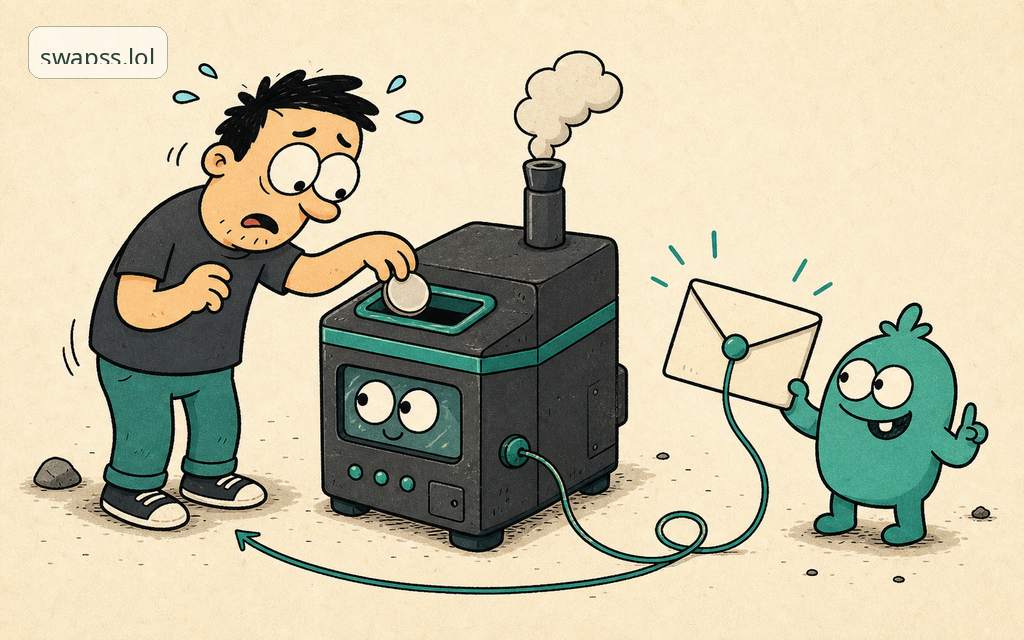
A refund address is the wallet you give the exchange to send your coins back to if the swap cannot complete. Most swaps finish without it ever being used. But on the rare run where something goes wrong, the refund address is the only thing that tells the exchange where your money belongs. Set one before you swap, on the same chain as the coin you send, and a failed swap becomes a short delay instead of a real loss.
What a refund address actually does
A swap moves one coin to another in a single flow: you get a rate, you send the deposit, the exchange does the conversion, and the converted coin lands at your destination address. The refund address is the safety exit. It does nothing in the normal case. It only matters when the swap can't reach the finish line and the deposit has to go back where it came from.
Think of it like the return address on an envelope. The letter usually arrives. But if it can't be delivered, the return address is what gets it back to you instead of a dead-letter pile.
When does a swap fail?
It is uncommon, and you usually see it coming. The honest list of reasons:
- The rate moved past the limit. A quote is good for a short window. If the market jumps and your deposit arrives after the rate you locked is no longer valid, the swap may not go through at the price you saw.
- The amount was off. You see an amount to send. If a wallet shaves a network fee off the wrong side, or you round, the deposit can land too low or too high for the locked quote.
- The deposit arrived very late. Slow networks and low fees mean a deposit can confirm long after the window closed.
- The destination chain hit trouble. Congestion or an outage on the receiving side can stall the payout long enough that returning the deposit is the safer call.
In each of these, nobody wants to send the wrong amount of the wrong coin into uncertainty. The clean move is to return your deposit untouched. That return needs an address.
How a refund address protects you
Without a refund address, a failed swap leaves your deposit in limbo. It is not gone, but getting it back means a support conversation, identity checks against the deposit, and waiting. With a refund address set up front, the return is automatic and fast. The coins go back to a wallet you already proved you control, because you named it before anything moved.
Setting one is the difference between "my deposit came back the same day" and "I had to open a ticket and wait."
How to choose the right refund address
The one rule that matters: the refund address must be on the same chain as the coin you send. A refund is your deposit coming back, in the coin you deposited. If you send USDT on one network, the refund address has to accept USDT on that same network. A correct address on the wrong chain is the most common way people lose funds, and it is avoidable.
Follow these steps:
- Use a wallet you control. Your own self-custody wallet or a personal account. Not a shared address, not a one-time address you will lose access to.
- Match the chain to the coin you are sending. Sending BTC? The refund address is a BTC address. Sending USDT on a given network? The refund address accepts that token on that network. Check our networks page if you are unsure which network a coin lives on.
- Copy, never type. Paste the address from your wallet. One wrong character and the coins go nowhere.
- Confirm chain, coin, and address together. Read all three before you commit. The address alone is not enough.
Common mistakes that cause real loss
- Refund address on the wrong network. The single biggest one. USDT exists on several chains; a refund address for the wrong one cannot receive your deposit back.
- An exchange deposit address as your refund target. Many platforms reject coins sent without a memo or tag, or sent on an unexpected network. Use a personal wallet you control directly.
- A typo from manual entry. Always paste. Then read the first and last characters against your wallet.
- Leaving it blank when the coin you send is privacy-focused or hard to trace. For some coins a refund without a stated address is much harder to route back. Setting one up front removes all doubt.
The short version
A refund address is cheap insurance you set in seconds. It is your wallet, on the chain of the coin you send, pasted not typed, confirmed with the chain and coin shown next to it. The normal swap never touches it. The rare failed one returns your deposit fast because of it.
Ready to trade? You will see the rate first, then set your destination and refund address before you send anything. Start a swap. If a refund ever stalls, @swappsy is a real person who can help.
Next step
Turn this into action
Use the related guides before you open or troubleshoot a swap.
- Refund docs Review refund handling and support evidence.
- Refund guide Learn what can slow or block a refund.
- Support Open the public support path for order evidence.